Gelatide Official Website › Blog › African mango evidence
African Mango: How Small Trials Became A Category
A handful of small trials in the 2000s, a systematic review that found them unconvincing, and fifteen years of marketing built on the gap between the two.
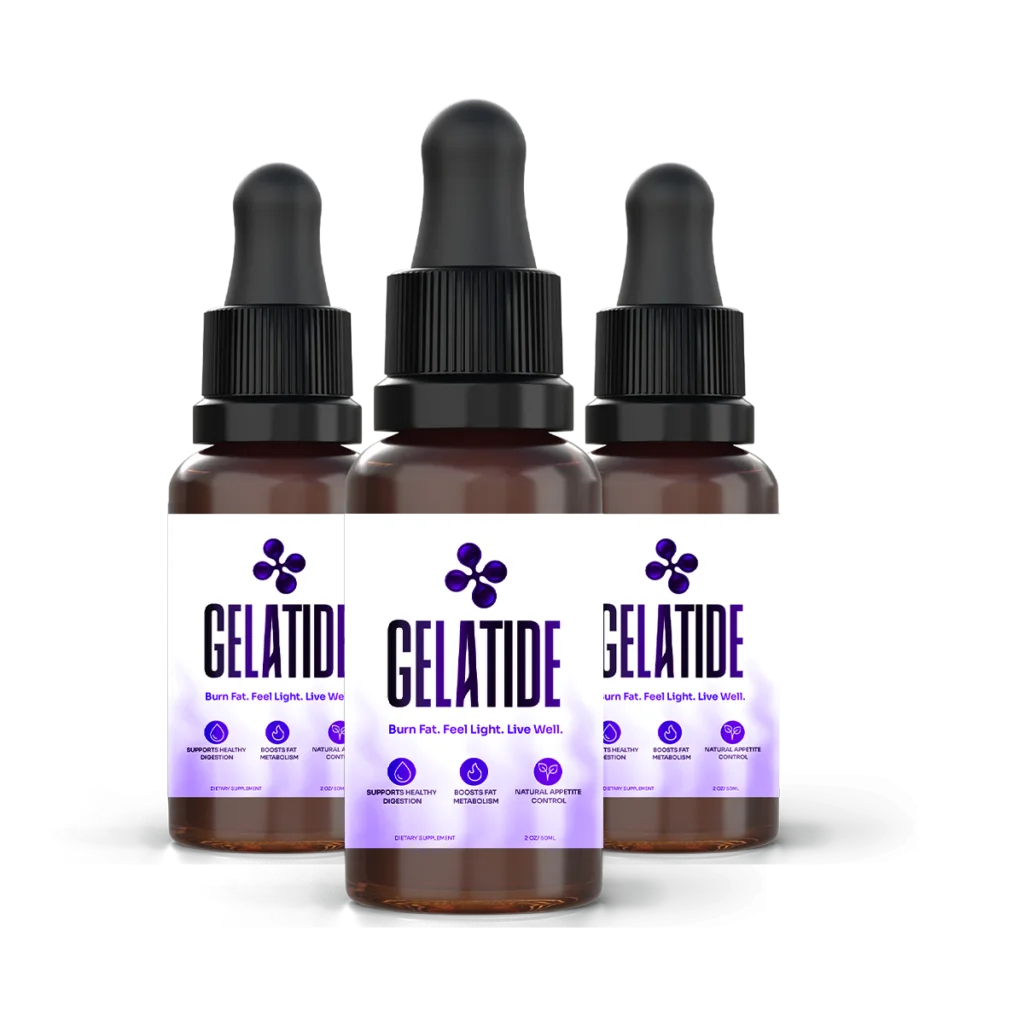
- Irvingia gabonensis is a West African tree whose seed extract became a supplement ingredient after a small number of trials in the 2000s.
- A systematic review found the evidence unconvincing. Small, short, poor methodological quality.
- Several trials came from one research group and were never independently replicated.
- The record has not meaningfully moved since 2013.
- It is still one of the most-marketed appetite ingredients on the market, which is the interesting part.
General information, not medical advice. Gelatide is a dietary supplement for healthy adults aged 18 and over. It is not a drug, it is not FDA-approved, and it is not intended to diagnose, treat, cure or prevent any disease. Two of its six botanicals carry caffeine and no total is printed, so if you take prescription medicine, manage blood pressure, or have a thyroid or liver condition, speak to a clinician or a pharmacist before adding it to anything.
What Irvingia gabonensis actually is
Irvingia gabonensis is a tree native to West and Central Africa. Its fruit is eaten; the seed, sometimes called dika nut or ogbono, is ground and used as a thickener in West African cooking. It has a long and entirely unremarkable food history.
The supplement ingredient is an extract of that seed. The proposed mechanisms are several and none is settled: effects on adipocyte differentiation, on leptin, on digestive enzyme activity. Mechanism stories in this category tend to be generated after a commercial interest exists rather than before, and it is worth holding them loosely.
What made it a category was not the mechanism. It was a small run of clinical trials published between roughly 2005 and 2009, and the marketing that followed them.
The trials the reputation rests on
The trials most commonly cited used 150 mg of extract twice a day, over periods of around ten weeks, in small groups of adults. They reported favourable effects on body weight and on several blood markers. Read in isolation, and in a press release, they read well.
Three features of that body of work matter more than the headline results, and none of them is visible from a product page.
- The sample sizes were small. Tens of participants rather than hundreds.
- The durations were short. Ten weeks is enough to detect a change and not enough to know whether it holds.
- The effect sizes reported were large relative to what anything else in this category produces, which in a small short trial is a reason for caution rather than excitement.
What happened when somebody reviewed them properly
Onakpoya, Davies, Posadzki and Ernst published a systematic review of the randomised controlled trials in the Journal of Dietary Supplements in 2013. A systematic review does something a reader cannot do alone: it finds every trial that meets a stated standard, assesses how each one was conducted, and reports the shape of the whole literature rather than the most quotable part of it.
Their conclusion, in outline: the included studies reported favourable effects, but they were small, short and of poor methodological quality, and the evidence was not convincing enough to support the claims being made for the ingredient.
That is not a finding that it does nothing. It is a finding that the available studies are not good enough to tell you either way, which is a distinction worth holding onto because the marketing collapses it in one direction and sceptics collapse it in the other.
The broader literature since has not rescued it. A 2020 meta-analysis of herbal medicines for weight found effects across the field that were sometimes statistically detectable and rarely of a size a person would notice, and a 2021 systematic review of supplements and alternative therapies found very few products in this space with evidence strong enough to recommend.
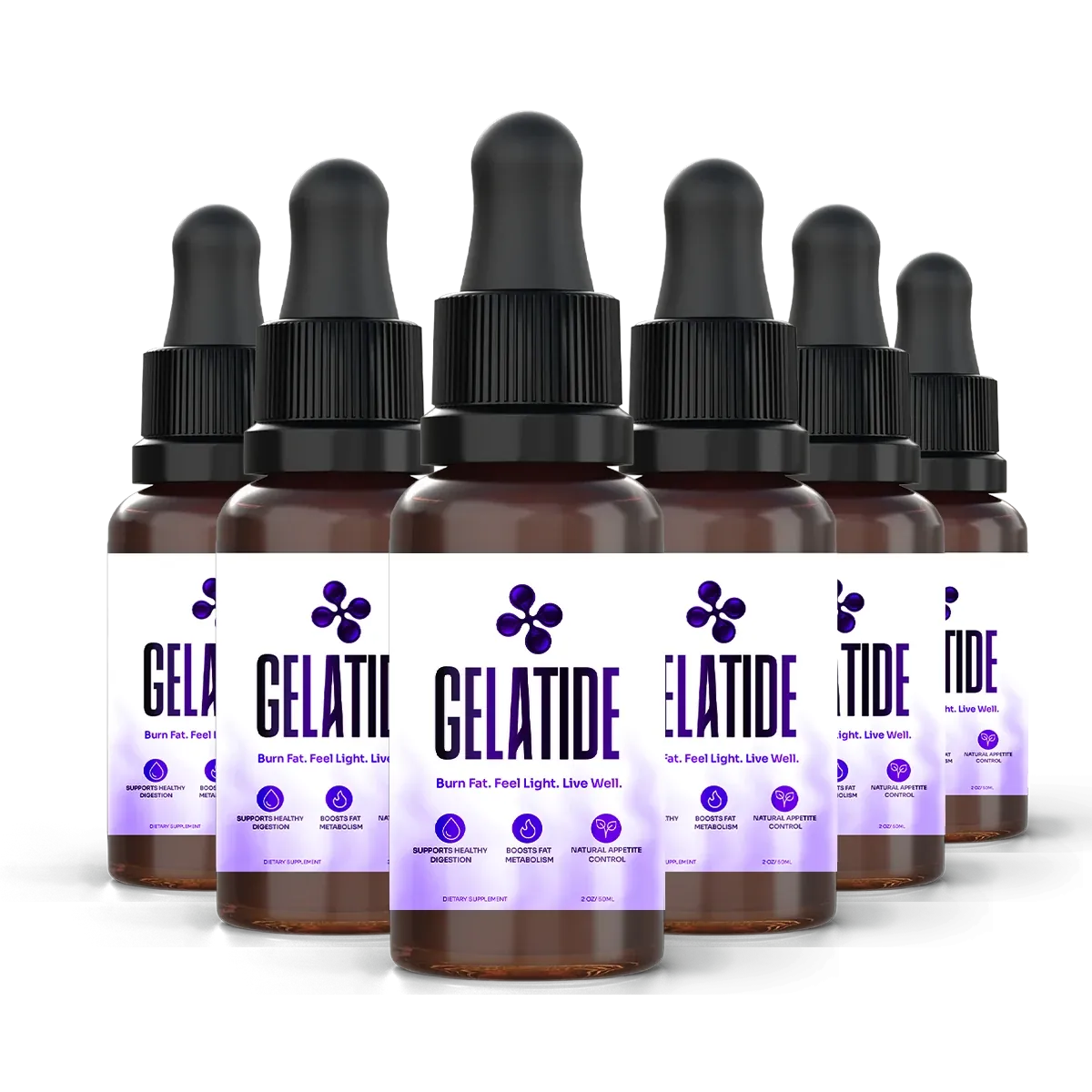
Gelatide contains African mango seed extract
How much, the label does not say. That is the recurring problem on this website and it is stated on every page. $49 to $79 a bottle, 60-day guarantee, and this article is published by the desk selling it.
$49 to $79 a bottle · 60-day money-back window
Order GelatideThe single-research-group problem
This is the part of the story that generalises beyond one ingredient, and it is worth understanding because it recurs across the whole supplement category.
Several of the influential Irvingia trials came from the same research group. That is not misconduct and it is not unusual: a group that develops an interest in an ingredient will naturally publish several studies about it. What it means is that the evidence base lacks the thing that makes evidence robust, which is independent replication by people with no stake in the answer.
Independent replication is the mechanism by which science corrects itself. When it is absent, a result can be perfectly honestly obtained and still not generalise, because the specific extract, the specific population, the specific measurement procedure or simple chance produced it. The only way to find out is for somebody unconnected to repeat it, and for this ingredient that largely did not happen.
| Question | Why it matters | Irvingia gabonensis |
|---|---|---|
| Human trials? | Cell and rodent work does not transfer reliably | Yes, a small number |
| Randomised and controlled? | Without it you measure time, placebo and volunteer enthusiasm | Yes |
| Independently replicated? | The mechanism by which a result becomes trustworthy | Largely not |
| Pooled in a systematic review? | Shows the shape of the literature rather than its best paper | Yes, and the conclusion was unfavourable |
Three of these four questions can be answered in five minutes with a search. The fourth is the one that decides most arguments.
Why African mango is still on labels
Because it works commercially, which is a different question from whether it works physiologically.
It has a name that sounds exotic and healthy. It has a plausible story. It has real published trials that can be cited without lying, provided nobody mentions the systematic review. And it has fifteen years of accumulated consumer recognition, which in this category is worth more than evidence.
The FTC expects advertisers to hold substantiation for health claims, and its guidance is explicit that the evidence has to match the claim being made. In practice a structure-function claim on a label is a low bar, and an ingredient with a handful of favourable small trials clears it without anyone having to show that the amount in the bottle would do anything.
The NIH fact sheet on weight-loss supplements is the useful counterweight here. It is organised by ingredient, it states doses, and it is written by people with nothing to sell.
What that means for this bottle specifically
Gelatide names African mango seed extract as one of its six botanicals. It prints no amount for it, which means two separate problems compound.
The first is the one this whole article is about: even at the dose used in the trials, the evidence did not survive systematic review. The second is that the dose in this bottle is unknown, so a reader cannot even establish whether they are getting the amount that failed to convince.
This desk sells this product. It also thinks a buyer should understand that African mango is doing more marketing work than physiological work in this category, and that if the appetite claim on the front of the bottle is what is selling you the product, this is the ingredient most likely to be underwriting it. The full picture is on the ingredients page and the claim analysis is on the benefits page.
What would change the picture
Three things, none of them exotic.
- A large, independent, randomised trial. Several hundred participants, six months, run by a group with no commercial connection to the ingredient. That is what would settle it, and it is what has not happened in fifteen years.
- A standardised extract with a stated marker compound. Botanical extracts vary enormously, and “African mango seed extract” on a label could mean anything.
- A milligram figure on the bottle. The cheapest of the three by a wide margin, and the one this product could do tomorrow.
Until the first happens, the honest position on Irvingia gabonensis is: an ingredient with a small, unreplicated, unfavourably-reviewed evidence base, sold on a reputation that outran it. That is a less exciting sentence than the ones you will find elsewhere, and it is the one this desk is willing to stand behind.
It is worth being clear about what that position is not. It is not a claim that African mango has been disproved, because it has not been; a systematic review finding the evidence unconvincing is a statement about the quality of the studies rather than a demonstration that the ingredient is inert. It is not a claim that the researchers did anything wrong. And it is not a reason to treat every botanical the same way, because capsicum on this same label has three pooled analyses behind it and deserves a different answer.
The reason to single this one out is that it is doing disproportionate commercial work. When a product in this category leads on appetite, African mango is very often the ingredient underwriting the claim, and a buyer who knows how thin that underwriting is will read the front of the bottle differently. That is the entire purpose of this article, and it is why a retailer publishing it is worth more than a retailer who does not.
Sources cited in this article
- Onakpoya I, Davies L, Posadzki P, Ernst E. The efficacy of Irvingia gabonensis supplementation in the management of overweight and obesity: a systematic review of randomized controlled trials. J Diet Suppl. 2013;10(1):29-38. https://pubmed.ncbi.nlm.nih.gov/23419021/
- Maunder A, Bessell E, Lauche R, Adams J, Sainsbury A, Fuller NR. Effectiveness of herbal medicines for weight loss: a systematic review and meta-analysis of randomized controlled trials. Diabetes Obes Metab. 2020;22(6):891-903. https://pubmed.ncbi.nlm.nih.gov/31984610/
- Batsis JA, Apolzan JW, Bagley PJ, et al. A systematic review of dietary supplements and alternative therapies for weight loss. Obesity (Silver Spring). 2021;29(7):1102-1113. https://pubmed.ncbi.nlm.nih.gov/34159755/
- National Institutes of Health, Office of Dietary Supplements. Dietary Supplements for Weight Loss: Fact Sheet for Health Professionals. https://ods.od.nih.gov/factsheets/WeightLoss-HealthProfessional/
- Federal Trade Commission. Health Products Compliance Guidance. December 2022. https://www.ftc.gov/business-guidance/resources/health-products-compliance-guidance

Every page, every journal post, the bottle facts and the ingredients go through review by Dr. Kia Mitchell, MD before they ship. We write from the printed Gelatide bottle and the seller’s own listing artwork, cite public research beside the amount that research actually used, and print “not published” wherever a figure is not disclosed rather than estimating it. This label names six botanicals and publishes an amount for none of them, and that fact appears in every article that names one. Every PubMed record here was confirmed through the NCBI summary interface before it was written down. Corrections are made on the page itself and the review date moves forward. Write to [email protected]. Last updated September 17, 2026.