Gelatide Official Website › Ingredients
What Is in Gelatide: A Guide to Its Six Ingredients
Gelatide contains six botanical extracts.
The list is green tea leaf, guarana seed, African mango seed, Coleus forskohlii root, capsicum annuum fruit and raspberry ketones. Two of the six carry natural caffeine.
Learn what each one is there for in how Gelatide works.
Each entry carries four things: why the ingredient is here, what the research found, the dose it used, and what to watch out for.
The one number missing from every Gelatide ingredient
The difference between a supplement you can evaluate and one you cannot.
| Ingredient | Dose in the published trials | Printed in Gelatide |
|---|---|---|
| Green Tea Leaf Extract Camellia sinensis | 270 to 1,200 mg of catechins a day in the pooled trials | not published |
| Guarana Seed Extract Paullinia cupana | 50 to 75 mg of dried extract a day in the fatigue trial | not published |
| African Mango Seed Extract Irvingia gabonensis | 150 mg twice a day in the most-cited trial | not published |
| Coleus Forskohlii Root Extract Plectranthus barbatus | 250 mg of a 10 percent forskolin extract twice a day | not published |
| Capsicum Annuum Fruit Extract Capsicum annuum | 0.9 to 10 mg of capsaicinoids a day across the pooled trials | not published |
| Raspberry Ketones 4-(4-hydroxyphenyl)butan-2-one | no human trial of the isolated compound exists | not published |
Six rows, six blanks. Every middle-column figure comes from a paper cited below.
The six botanicals in Gelatide, in the order the label lists them
Latin binomial, plant part, research, trial dose, interactions.
Green Tea Leaf Extract
Camellia sinensis · amount in Gelatide: not publishedWhy it is here. The catechin source, and one of the two caffeine sources in the bottle.
What the research found. Green tea has the deepest research record of the six, and it is still modest. A meta-analysis of fifteen trials found catechins with caffeine produced a small reduction in weight and waist; the waist effect lost significance once caffeine was controlled for, which hints at where the activity sits. An earlier meta-analysis put the average weight difference under 1.5 kg over twelve weeks. On appetite specifically, a meta-analysis of randomised trials found no consistent change in leptin or ghrelin.
Trial dose: 270 to 1,200 mg of catechins a day in the pooled trials. In this bottle: not published.
What to watch. Concentrated green tea extract, as opposed to brewed tea, has been associated with liver injury in a small number of case reports. The United States Pharmacopeia reviewed those cases and now asks for a cautionary statement on products carrying the extract. This label does not carry one.
Sources: the 2010 meta-analysis of green tea catechins Hursel's 2009 meta-analysis of green tea and weight the meta-analysis of green tea on leptin and ghrelin the United States Pharmacopeia review of green tea extract and the liver the LiverTox monograph on green tea
Guarana Seed Extract
Paullinia cupana · amount in Gelatide: not publishedWhy it is here. A stimulant seed. It is the second caffeine source in the bottle.
What the research found. Guarana seed carries roughly two to four times the caffeine of coffee bean by weight, and most of what it reliably does in trials is what caffeine does. A randomised cycling trial found it beat a matched low dose of plain caffeine, which hints that something else may contribute. A randomised trial in patients on chemotherapy found it reduced fatigue. Neither is an appetite finding, and no trial shows guarana reduces how much a person eats.
Trial dose: 50 to 75 mg of dried extract a day in the fatigue trial. In this bottle: not published.
What to watch. This is the ingredient that makes the caffeine question unanswerable on this label. Guarana and green tea both carry caffeine, the two stack inside one bottle, and no total is printed. Caffeine raises blood pressure acutely and interacts with stimulant medication, some asthma medication and some antibiotics.
Sources: the 2024 guarana cycling trial the randomised guarana fatigue trial the critical review of caffeine and blood pressure MedlinePlus on caffeine
African Mango Seed Extract
Irvingia gabonensis · amount in Gelatide: not publishedWhy it is here. The ingredient most often attached to appetite claims in this category.
What the research found. African mango is the one on this panel whose reputation most outruns its evidence. A systematic review found the trials reported favourable effects but were small, short and of poor methodological quality, and concluded the evidence was not convincing. Several came from one research group and were never independently replicated. The record has not moved much since.
Trial dose: 150 mg twice a day in the most-cited trial. In this bottle: not published.
What to watch. Reported side effects in the trials were mild and mostly digestive: headache, gas, disturbed sleep. The larger caution is interpretive rather than pharmacological. If a seller leads on appetite control, this is usually the ingredient doing the marketing work, and it is the one a reader should ask the hardest questions about.
Sources: Onakpoya's systematic review of African mango Maunder's meta-analysis of herbal medicines for weight
Coleus Forskohlii Root Extract
Plectranthus barbatus · amount in Gelatide: not publishedWhy it is here. The forskolin source, positioned around fat metabolism.
What the research found. The trial everyone cites is from 2005: thirty overweight men, twelve weeks, 250 mg of a ten per cent forskolin extract twice a day. Body fat and fat mass fell against placebo; body weight itself did not move significantly, and the same group's companion trial in women found nothing. A twelve-week trial published in 2026 reported weight change with a standardised extract. Two trials twenty-one years apart is not a settled evidence base.
Trial dose: 250 mg of a 10 percent forskolin extract twice a day. In this bottle: not published.
What to watch. Forskolin lowers blood pressure and can add to the effect of blood pressure medication and blood thinners. It is also a vasodilator, so anyone with a heart condition should treat this as a conversation with a clinician rather than a shelf decision.
Sources: the 2005 forskolin trial in overweight men the 2026 twelve-week Coleus forskohlii trial the NIH Office of Dietary Supplements fact sheet on weight-loss supplements
Capsicum Annuum Fruit Extract
Capsicum annuum · amount in Gelatide: not publishedWhy it is here. The chilli extract, and the one ingredient with a real appetite finding.
What the research found. This is the only one of the six with a meta-analysis pointed squarely at appetite. Pooling the trials that measured what people actually ate, capsaicinoids cut roughly 74 kilocalories per meal. That is a real, measured effect and a small one: about a plain biscuit. Separate meta-analyses found a modest rise in energy expenditure and a small measurable effect on body weight. All of it depended on a stated dose.
Trial dose: 0.9 to 10 mg of capsaicinoids a day across the pooled trials. In this bottle: not published.
What to watch. Capsicum extract is a common cause of the burning or reflux some buyers report in the first week. Taking the drops with food rather than on an empty stomach is the usual fix, and it is also the reason the label's timing instruction matters more than it looks.
Sources: Whiting's meta-analysis of capsaicinoids and energy intake the 2021 meta-analysis of capsaicinoids and thermogenesis the capsaicin and capsiate meta-analysis of human studies the 2021 meta-analysis of capsaicinoids and thermogenesis
Raspberry Ketones
4-(4-hydroxyphenyl)butan-2-one · amount in Gelatide: not publishedWhy it is here. A flavour compound marketed for fat metabolism.
What the research found. There is no published randomised controlled trial of raspberry ketone alone in humans. The 2021 review that pulls the literature together describes cell culture and rodent work and says as much. The rodent doses that produced effects were very large relative to body weight. Anything a seller tells you here is an extrapolation from mice.
Trial dose: no human trial of the isolated compound exists. In this bottle: not published.
What to watch. The absence of human trials is also an absence of human safety data at supplement doses. Nothing alarming has been reported; nothing has been systematically looked for either.
Sources: the 2021 pharmacological review of raspberry ketone the NIH Office of Dietary Supplements fact sheet on weight-loss supplements
What the missing amounts mean for a Gelatide buyer
An ingredient list without amounts is not automatically a bad product. What it always is, though, is unevaluable. You cannot check the caffeine against your own tolerance, a pharmacist has no number to reason from, and nothing here can be compared against the NIH fact sheet on weight-loss supplements, which is organised by ingredient and dose.
What would change our assessment. A rear-panel photograph showing milligram figures, a certificate of analysis with assay results, or a total caffeine declaration. Any of the three, sent to [email protected], would be published here with the review date moved forward.
How this Gelatide ingredient page was written
This desk publishes what the bottle says and marks the gaps. The four claims below are the ones a sceptical reader can audit in ten minutes, which is the only reason to make them:
- The bottle is the source. The three support lines, the 2 fl oz volume, the liquid-drop format and the six ingredient names come from the printed label and the seller’s own listing artwork, not from a review column.
- The gaps are marked, never filled in. This label carries no amount for any of its six botanicals, no caffeine total and no serving size. Nothing undisclosed is estimated anywhere on this website, including in the structured data a machine reads.
- Sources are real and linked in the sentence. Every study cited here was confirmed against its PubMed record before it was written down, and the government pages were opened in a browser rather than assumed, because several of those hosts answer an automated request with a 404 that looks exactly like a dead link.
- Corrections change the date. Write to [email protected] and the review date at the foot of the page moves forward.
We earn when you buy. Gelatidefit is the Gelatide retail desk named at the top of this page, and this website makes money on orders placed through it. That is exactly why the missing-amounts table, the three-star reviews and the page explaining why the appetite claim is the thinnest of the three are here: they are where our interest and yours pull apart, and you should be able to watch us choose.
The desk on +1 (202) 604-0611 handles tracking, address changes, cancellations and refunds. It is not a sales line and this website never presents it as a way to place an order; orders go through the checkout only.

Every page, every journal post, the bottle facts and the ingredients go through review by Dr. Kia Mitchell, MD before they ship. We write these pages from the printed Gelatide bottle and the seller’s own listing artwork, cite public research for each of the six named botanicals, and print “not published” wherever a figure is not disclosed rather than estimating it. This label names six ingredients and prints an amount for none of them, and that fact appears on every page where an ingredient is named. Every study referenced here was checked against its PubMed record before it was written down, and the government pages were opened in a browser rather than assumed. Where the seller’s marketing claims more than the bottle supports, we say so on the page. Corrections are made on the page itself and the review date moves forward. Write to [email protected]. Last reviewed September 2026 by Dr. Kia Mitchell, MD.
Sources for the Gelatide ingredient research
- Phung OJ, Baker WL, Matthews LJ, Lanosa M, Thorne A, Coleman CI. Effect of green tea catechins with or without caffeine on anthropometric measures: a systematic review and meta-analysis. Am J Clin Nutr. 2010;91(1):73-81. https://pubmed.ncbi.nlm.nih.gov/19906797/
- Hursel R, Viechtbauer W, Westerterp-Plantenga MS. The effects of green tea on weight loss and weight maintenance: a meta-analysis. Int J Obes (Lond). 2009;33(9):956-61. https://pubmed.ncbi.nlm.nih.gov/19597519/
- Haghighatdoost F, Nobakht M Gh BF, Hariri M. Effect of green tea on plasma leptin and ghrelin levels: a systematic review and meta-analysis of randomized controlled clinical trials. Nutrition. 2018;45:17-23. https://pubmed.ncbi.nlm.nih.gov/29129232/
- Oketch-Rabah HA, Roe AL, Rider CV, et al. United States Pharmacopeia (USP) comprehensive review of the hepatotoxicity of green tea extracts. Toxicol Rep. 2020;7:386-402. https://pubmed.ncbi.nlm.nih.gov/32140423/
- LiverTox: Clinical and Research Information on Drug-Induced Liver Injury. Green Tea. National Institute of Diabetes and Digestive and Kidney Diseases. https://www.ncbi.nlm.nih.gov/books/NBK547925/
- Penna EM, Coelho DB, Maia-Lima A, et al. Guarana (Paullinia cupana) but not low-dose caffeine improves cycling time-trial performance versus placebo. Int J Sport Nutr Exerc Metab. 2024;34(1):30-37. https://pubmed.ncbi.nlm.nih.gov/37898479/
- de Oliveira Campos MP, Riechelmann R, Martins LC, Hassan BJ, Casa FB, Del Giglio A. Guarana (Paullinia cupana) improves fatigue in breast cancer patients undergoing systemic chemotherapy. J Altern Complement Med. 2011;17(6):505-12. https://pubmed.ncbi.nlm.nih.gov/21612429/
- De Giuseppe R, Di Napoli I, Granata F, Mottolese A, Cena H. Caffeine and blood pressure: a critical review perspective. Nutr Res Rev. 2019;32(2):169-175. https://pubmed.ncbi.nlm.nih.gov/30947761/
- MedlinePlus. Caffeine. U.S. National Library of Medicine. https://medlineplus.gov/caffeine.html
- Onakpoya I, Davies L, Posadzki P, Ernst E. The efficacy of Irvingia gabonensis supplementation in the management of overweight and obesity: a systematic review of randomized controlled trials. J Diet Suppl. 2013;10(1):29-38. https://pubmed.ncbi.nlm.nih.gov/23419021/
- Maunder A, Bessell E, Lauche R, Adams J, Sainsbury A, Fuller NR. Effectiveness of herbal medicines for weight loss: a systematic review and meta-analysis of randomized controlled trials. Diabetes Obes Metab. 2020;22(6):891-903. https://pubmed.ncbi.nlm.nih.gov/31984610/
- Godard MP, Johnson BA, Richmond SR. Body composition and hormonal adaptations associated with forskolin consumption in overweight and obese men. Obes Res. 2005;13(8):1335-43. https://pubmed.ncbi.nlm.nih.gov/16129715/
- Channangihalli Thimmegowda S, et al. A 12-week, double-blind, quasi-randomized, placebo-controlled study to evaluate the efficacy and safety of Coleus forskohlii (Forcslim) on body weight loss. J Int Soc Sports Nutr. 2026;23:2725137. https://pubmed.ncbi.nlm.nih.gov/42678522/
- National Institutes of Health, Office of Dietary Supplements. Dietary Supplements for Weight Loss: Fact Sheet for Health Professionals. https://ods.od.nih.gov/factsheets/WeightLoss-HealthProfessional/
- Whiting S, Derbyshire EJ, Tiwari B. Could capsaicinoids help to support weight management? A systematic review and meta-analysis of energy intake data. Appetite. 2014;73:183-8. https://pubmed.ncbi.nlm.nih.gov/24246368/
- Irandoost P, Lotfi Yagin N, Namazi N, et al. The effect of capsaicinoids or capsinoids in red pepper on thermogenesis in healthy adults: a systematic review and meta-analysis. Phytother Res. 2021;35(3):1358-1377. https://pubmed.ncbi.nlm.nih.gov/33063385/
- Zsiboras C, Matics R, Hegyi P, et al. Capsaicin and capsiate could be appropriate agents for treatment of obesity: a meta-analysis of human studies. Crit Rev Food Sci Nutr. 2018;58(9):1419-1427. https://pubmed.ncbi.nlm.nih.gov/28001433/
- Irandoost P, Lotfi Yagin N, Namazi N, et al. The effect of capsaicinoids or capsinoids in red pepper on thermogenesis in healthy adults: a systematic review and meta-analysis. Phytother Res. 2021;35(3):1358-1377. https://pubmed.ncbi.nlm.nih.gov/33063385/
- Rao S, Sathish Kumar M, et al. Pharmacological exploration of phenolic compound: raspberry ketone - update 2020. Plants (Basel). 2021;10(7):1323. https://pubmed.ncbi.nlm.nih.gov/34209554/
- National Institutes of Health, Office of Dietary Supplements. Dietary Supplements for Weight Loss: Fact Sheet for Health Professionals. https://ods.od.nih.gov/factsheets/WeightLoss-HealthProfessional/
- National Institutes of Health, Office of Dietary Supplements. Dietary Supplements for Weight Loss: Fact Sheet for Health Professionals. https://ods.od.nih.gov/factsheets/WeightLoss-HealthProfessional/
- Batsis JA, Apolzan JW, Bagley PJ, et al. A systematic review of dietary supplements and alternative therapies for weight loss. Obesity (Silver Spring). 2021;29(7):1102-1113. https://pubmed.ncbi.nlm.nih.gov/34159755/
Gelatide ingredient questions
How much of each ingredient is in Gelatide?
Not published. The label names six botanicals and prints a figure for none.
Which Gelatide ingredient has the strongest evidence?
Capsicum annuum, for appetite specifically: it is the only one of the six with a meta-analysis measuring how much people actually ate, at about 74 fewer kilocalories a meal. Green tea has the largest overall literature.
Which Gelatide ingredient has the weakest evidence?
Raspberry ketone. There is no published randomised controlled trial of the isolated compound in humans; the literature is cell culture and rodent work.
Do any Gelatide ingredients contain caffeine?
Two do. Guarana seed extract and green tea leaf extract both carry caffeine, and no combined total is printed anywhere on the label or the artwork.
Is there a proprietary blend in Gelatide?
The label does not use the words. The effect is the same or worse: a blend at least prints a total, and this label prints none.
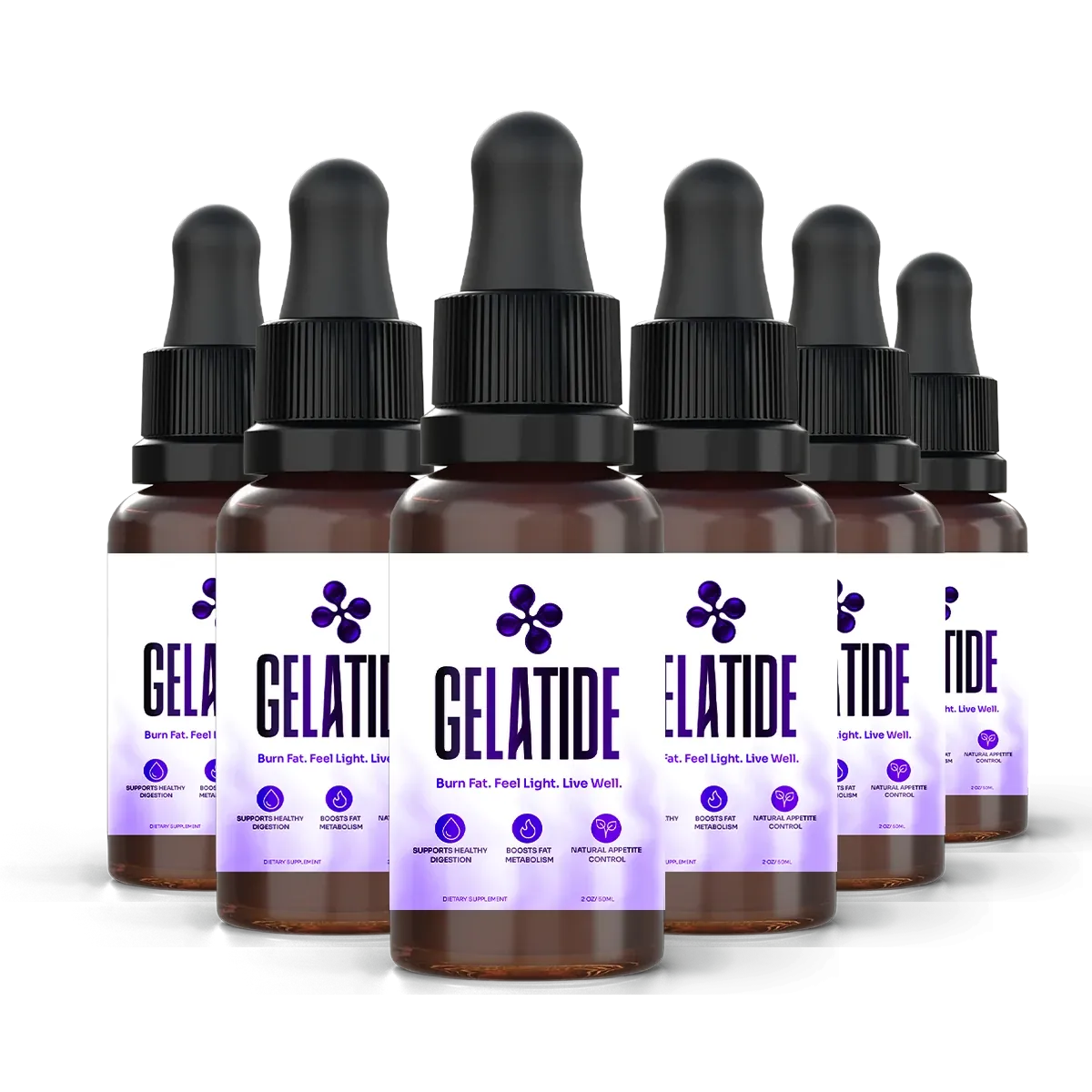
Buy Gelatide knowing exactly what is not on the label
Six named botanicals, no amounts, $49 to $79 a bottle and 60 days to send it back. That is the whole proposition, stated the way this desk would want it stated to us.
$294 for six bottles at $49 each · 60 days to change your mind
Get Gelatide — $49 to $79 a bottleOne-time payment, no subscription · 60-day money-back guarantee · lot GEL-26/GE-7447 · tracking and refunds +1 (202) 604-0611