Gelatide Official Website › Guide
The Metabolism Supplement Guide: What The Evidence Actually Supports
Metabolism supplements are botanical products that claim to affect energy expenditure, appetite or digestion. Most are built from the same dozen ingredients. The effects that survive meta-analysis are real and small, they all depend on a stated dose, and the single most useful thing a label can do is print one.
Written to be useful whether or not you buy anything from this website, and to survive being read by someone who buys a competitor.
What a metabolism supplement is, and what it legally may say
There is no regulatory category called a metabolism supplement. It is a marketing description for dietary supplements, usually botanical, that carry structure-function claims about energy expenditure, appetite, digestion or fat handling.
A structure-function claim is one that describes an effect on the structure or function of the body. It may be made without pre-approval, provided it is truthful, is not about a disease, and is accompanied by the disclaimer you have seen at the foot of every page on this website. The FDA labeling guide sets out the boundary in detail, and the short version is that “supports healthy digestion” is permitted while “treats irritable bowel syndrome” is not.
What that rule does not require is any relationship between the claim and the amount in the bottle. A label may say it supports appetite control while containing a quantity of the relevant ingredient far below anything ever tested. That is the central structural problem in this category and everything else in this guide follows from it.
What supplements are not
The FDA does not approve dietary supplements before sale. A manufacturer registers its facility, which is a filing requirement, and is responsible for its own products being safe and accurately labelled. Nobody checks a new supplement before it reaches a shelf. Prescription treatments for overweight exist and they went through controlled trials to get there. The two things are not comparable and should not be compared.
The ingredients that keep appearing, and what each one has behind it
Two patterns run through that table. The first is that the effects which survive pooling are real and small: a kilogram or two over twelve weeks, or one biscuit of food per meal. The second is that every one of them was produced at a dose somebody wrote down.
The wider picture supports both. A 2021 systematic review of supplements and alternative therapies for weight found very few products with evidence strong enough to recommend, and a meta-analysis of herbal medicines in the same space found effects that were sometimes statistically detectable and rarely of a size a person would notice in daily life.
| Ingredient | What the research supports | Typical trial dose |
|---|---|---|
| Green tea leaf extract | Small reductions in weight and waist in pooled trials, with part of the effect attributable to caffeine. No consistent effect on hunger hormones. | 270–1,200 mg catechins a day |
| Caffeine, from any source | Raises alertness and energy expenditure, lowers perceived effort, raises blood pressure acutely. The best-established item on any panel in this category. | 100–400 mg a day |
| Capsaicinoids from chilli | About 74 fewer kilocalories per meal in pooled energy-intake trials, plus a modest rise in thermogenesis. | 0.9–10 mg capsaicinoids a day |
| Coleus forskohlii / forskolin | One 2005 trial found fat mass fell in overweight men without a significant weight change; a companion trial in women found nothing. A 2026 trial reported weight change. | 250 mg of a 10 percent extract twice a day |
| African mango / Irvingia gabonensis | A systematic review found the trials small, short and of poor quality, and the evidence unconvincing. | 150 mg twice a day |
| Raspberry ketone | No published randomised trial of the isolated compound in humans. Cell and rodent work only. | No human dose established |
| Garcinia cambogia | Widely sold, repeatedly tested, and the pooled results have not supported the claims made for it. | Variable |
| Chromium | A trace mineral with a genuine role in insulin signalling and small, inconsistent effects on weight in trials. | 200–1,000 mcg a day |
Doses are the ones the cited research used. Nothing in this table is a recommendation, and the right column is the column a label has to let you compare against.
Caffeine is on most of these labels, often twice
This is the single most practical piece of advice in this guide. Several botanicals in this category carry caffeine, and a label can contain two or three of them without ever using the word.
Guarana seed. Green tea leaf. Green coffee bean. Yerba mate. Kola nut. Any of those on an ingredient list means caffeine, and two of them means caffeine twice. Guarana in particular carries roughly two to four times the caffeine of coffee bean by weight.
That matters for three reasons. Caffeine raises blood pressure acutely, which is clinically relevant in exactly the population most likely to be shopping here. It interacts with several classes of medication, including stimulants, some asthma drugs and some antibiotics. And it produces effects a buyer can feel, which means it is frequently the reason a product seems to be working when the botanical it is bundled with is doing nothing at all.
The check takes ten seconds. Count the caffeine-bearing ingredients on the label, then look for a total caffeine figure. If there are two or more and no total, you cannot dose that product safely and neither can your pharmacist. A total caffeine declaration costs the manufacturer almost nothing and reveals nothing about the formula, so its absence is a choice.
How long anything in this category should take
Weeks. Every trial that found a change in body composition in this category ran eight to twelve weeks, and the meta-analyses pool trials of twelve weeks and longer.
Two effects are faster and it is worth separating them out, because confusing them is how people reach the wrong conclusion about a product. Caffeine works within an hour, so anything noticed on day one is caffeine. The capsicum appetite effect was measured within single meals, so that is fast too. Anything cumulative is slow, and if a product has a cumulative effect at all it will not announce itself in week one.
The practical consequence is about refund windows rather than about biology. A thirty-day guarantee on a product whose plausible onset is three to six weeks asks you to decide at the moment the evidence starts arriving. Sixty days is the minimum that makes a product in this category testable, and it is a reasonable thing to check before buying rather than afterwards.
Five things on these labels that tell you nothing
GMP certification
A statement about how a facility is run: documented procedures, cleaning, record keeping. Valuable in its own terms and entirely silent on whether the contents work or how much of them there is.
FDA-registered facility
A filing requirement. It is routinely presented as though it were approval, and the FDA is explicit that supplements are not approved before sale.
Natural, or 100 percent natural
A marketing word with no regulatory definition in supplements. Caffeine from guarana is natural. So is ephedra.
Doctor formulated or doctor developed
Check whether a doctor is named. If no name and no credential appears anywhere, there is nothing here a reader can verify, and an unverifiable authority claim is worth less than none.
Clinically studied ingredients
This phrase attaches a study to an ingredient rather than to the product, and it is technically true of almost anything. The question it is designed to deflect is whether the amount in the bottle matches the amount in the study.
A struck-through comparison price
A figure the seller chose. It is not evidence the product has ever sold at that price. The FTC has guidance on this and it is worth knowing what it expects.
Four things on a label that do tell you something
- A milligram figure against every named ingredient. Everything else is secondary. Without this, no research can be attached to the product and no pharmacist can assess it.
- An extract ratio or a standardisation percentage. “Standardised to 10 percent forskolin” turns a milligram figure into something comparable with a trial. Without it, the milligrams tell you less than they appear to.
- A total for anything with a dose ceiling. Caffeine is the obvious one. So is any mineral with an established upper intake level.
- A third-party verification mark you can look up. The USP programme is the best-known. Its entire value is that the listing is checkable by a consumer, which is exactly what a printed seal on a bottle is not.
A product carrying all four is rare in this category and is worth paying more for. A product carrying none of them is not necessarily bad; it is unevaluable, which is a different problem and one the buyer rather than the manufacturer ends up carrying.
For a worked example of the second case, read the label page for the product this website sells. It prints twelve rows and eleven of them say not published, and this desk publishes that rather than hiding it.
Who wrote this guide
This desk publishes what the bottle says and marks the gaps. The four claims below are the ones a sceptical reader can audit in ten minutes, which is the only reason to make them:
- The bottle is the source. The three support lines, the 2 fl oz volume, the liquid-drop format and the six ingredient names come from the printed label and the seller’s own listing artwork, not from a review column.
- The gaps are marked, never filled in. This label carries no amount for any of its six botanicals, no caffeine total and no serving size. Nothing undisclosed is estimated anywhere on this website, including in the structured data a machine reads.
- Sources are real and linked in the sentence. Every study cited here was confirmed against its PubMed record before it was written down, and the government pages were opened in a browser rather than assumed, because several of those hosts answer an automated request with a 404 that looks exactly like a dead link.
- Corrections change the date. Write to [email protected] and the review date at the foot of the page moves forward.
We earn when you buy. Gelatidefit is the Gelatide retail desk named at the top of this page, and this website makes money on orders placed through it. That is exactly why the missing-amounts table, the three-star reviews and the page explaining why the appetite claim is the thinnest of the three are here: they are where our interest and yours pull apart, and you should be able to watch us choose.
The desk on +1 (202) 604-0611 handles tracking, address changes, cancellations and refunds. It is not a sales line and this website never presents it as a way to place an order; orders go through the checkout only.
Every page, every journal post, the bottle facts and the ingredients go through review by Dr. Kia Mitchell, MD before they ship. We write these pages from the printed Gelatide bottle and the seller’s own listing artwork, cite public research for each of the six named botanicals, and print “not published” wherever a figure is not disclosed rather than estimating it. This label names six ingredients and prints an amount for none of them, and that fact appears on every page where an ingredient is named. Every study referenced here was checked against its PubMed record before it was written down, and the government pages were opened in a browser rather than assumed. Where the seller’s marketing claims more than the bottle supports, we say so on the page. Corrections are made on the page itself and the review date moves forward. Write to [email protected]. Last reviewed September 2026 by Dr. Kia Mitchell, MD.
Sources for this metabolism supplement guide
- National Institutes of Health, Office of Dietary Supplements. Dietary Supplements for Weight Loss: Fact Sheet for Health Professionals. https://ods.od.nih.gov/factsheets/WeightLoss-HealthProfessional/
- U.S. Food and Drug Administration. Structure/Function Claims. https://www.fda.gov/food/nutrition-food-labeling-and-critical-foods/structurefunction-claims
- U.S. Food and Drug Administration. Dietary Supplement Labeling Guide: Chapter VI. Claims. https://www.fda.gov/food/dietary-supplements-guidance-documents-regulatory-information/dietary-supplement-labeling-guide-chapter-vi-claims
- U.S. Food and Drug Administration. Questions and Answers on Dietary Supplements. https://www.fda.gov/food/information-consumers-using-dietary-supplements/questions-and-answers-dietary-supplements
- Federal Trade Commission. Health Products Compliance Guidance. December 2022. https://www.ftc.gov/business-guidance/resources/health-products-compliance-guidance
- United States Pharmacopeia. Dietary Supplements Verification Program. https://www.usp.org/verification-services/dietary-supplements-verification-program
- Batsis JA, Apolzan JW, Bagley PJ, et al. A systematic review of dietary supplements and alternative therapies for weight loss. Obesity (Silver Spring). 2021;29(7):1102-1113. https://pubmed.ncbi.nlm.nih.gov/34159755/
- Maunder A, Bessell E, Lauche R, Adams J, Sainsbury A, Fuller NR. Effectiveness of herbal medicines for weight loss: a systematic review and meta-analysis of randomized controlled trials. Diabetes Obes Metab. 2020;22(6):891-903. https://pubmed.ncbi.nlm.nih.gov/31984610/
- De Giuseppe R, Di Napoli I, Granata F, Mottolese A, Cena H. Caffeine and blood pressure: a critical review perspective. Nutr Res Rev. 2019;32(2):169-175. https://pubmed.ncbi.nlm.nih.gov/30947761/
- MedlinePlus. Caffeine. U.S. National Library of Medicine. https://medlineplus.gov/caffeine.html
- Whiting S, Derbyshire EJ, Tiwari B. Could capsaicinoids help to support weight management? A systematic review and meta-analysis of energy intake data. Appetite. 2014;73:183-8. https://pubmed.ncbi.nlm.nih.gov/24246368/
- Phung OJ, Baker WL, Matthews LJ, Lanosa M, Thorne A, Coleman CI. Effect of green tea catechins with or without caffeine on anthropometric measures: a systematic review and meta-analysis. Am J Clin Nutr. 2010;91(1):73-81. https://pubmed.ncbi.nlm.nih.gov/19906797/
- Haghighatdoost F, Nobakht M Gh BF, Hariri M. Effect of green tea on plasma leptin and ghrelin levels: a systematic review and meta-analysis of randomized controlled clinical trials. Nutrition. 2018;45:17-23. https://pubmed.ncbi.nlm.nih.gov/29129232/
- Onakpoya I, Davies L, Posadzki P, Ernst E. The efficacy of Irvingia gabonensis supplementation in the management of overweight and obesity: a systematic review of randomized controlled trials. J Diet Suppl. 2013;10(1):29-38. https://pubmed.ncbi.nlm.nih.gov/23419021/
- Godard MP, Johnson BA, Richmond SR. Body composition and hormonal adaptations associated with forskolin consumption in overweight and obese men. Obes Res. 2005;13(8):1335-43. https://pubmed.ncbi.nlm.nih.gov/16129715/
- Rao S, Sathish Kumar M, et al. Pharmacological exploration of phenolic compound: raspberry ketone - update 2020. Plants (Basel). 2021;10(7):1323. https://pubmed.ncbi.nlm.nih.gov/34209554/
- National Institute of Diabetes and Digestive and Kidney Diseases. Prescription Medications to Treat Overweight and Obesity. https://www.niddk.nih.gov/health-information/weight-management/prescription-medications-treat-overweight-obesity
See this guide applied to a real label
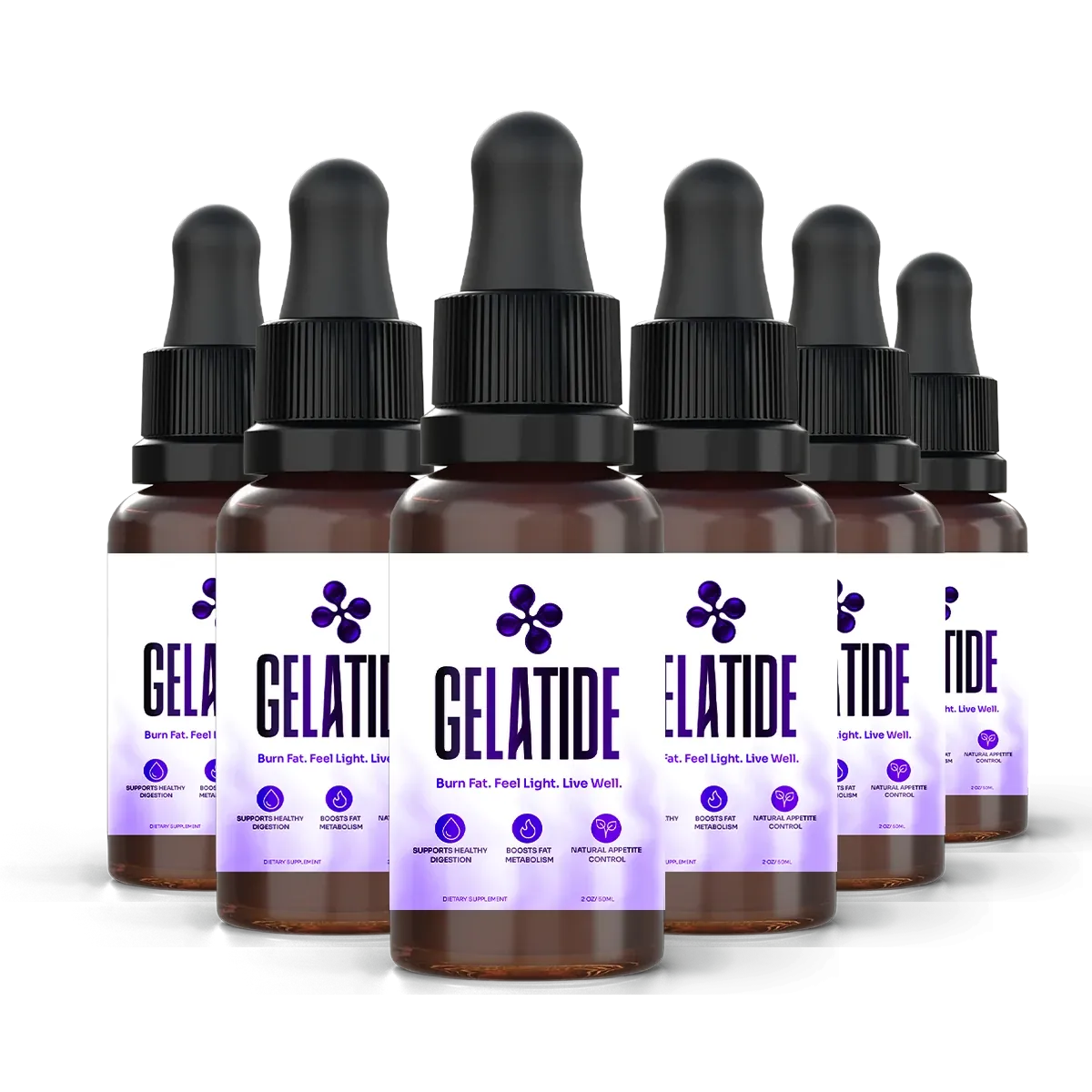
Gelatide is the product this desk sells. It names six of the ingredients above and prints a figure for none of them, and every page here says so.
$294 for six bottles at $49 each · 60 days to change your mind
Get Gelatide — $49 to $79 a bottleOne-time payment, no subscription · 60-day money-back guarantee · lot GEL-26/GE-7447 · tracking and refunds +1 (202) 604-0611