Gelatide Official Website › Blog › Does appetite control work
Does Appetite Control Work? The 74-Calorie Answer
One of the six botanicals on this label has a meta-analysis measuring how much people actually ate. It found 74 fewer kilocalories a meal, at a dose this label does not print.
- One ingredient has a real appetite finding. Capsaicinoids from chilli cut about 74 kilocalories a meal in pooled trials. That is roughly a plain biscuit.
- One was measured and showed nothing. Green tea produced no consistent change in leptin or ghrelin across randomised trials.
- One failed systematic review. African mango, which carries most of the appetite marketing in this category.
- Three have never been measured for it. Guarana, Coleus forskohlii and raspberry ketone have no human food-intake data at all.
- All of it depended on a stated dose. This label prints none, so none of it transfers.
General information, not medical advice. Gelatide is a dietary supplement for healthy adults aged 18 and over. It is not a drug, it is not FDA-approved, and it is not intended to diagnose, treat, cure or prevent any disease. Two of its six botanicals carry caffeine and no total is printed, so if you take prescription medicine, manage blood pressure, or have a thyroid or liver condition, speak to a clinician or a pharmacist before adding it to anything.
What appetite control means on a supplement label
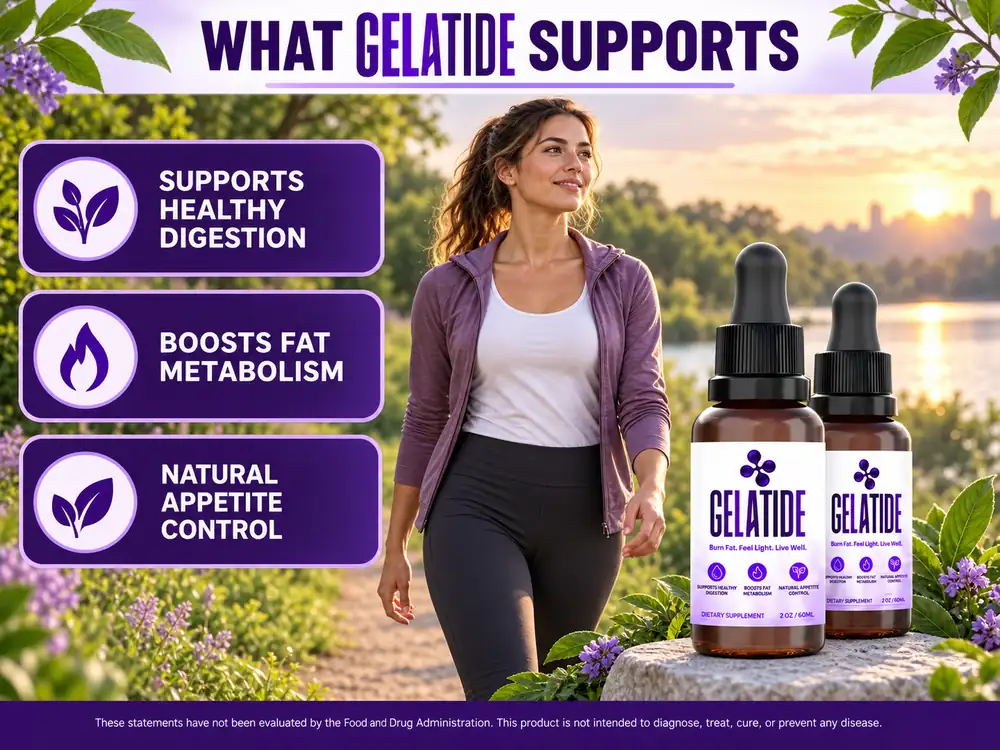
“Natural Appetite Control” is one of three lines printed on the front of the Gelatide bottle, alongside Supports Healthy Digestion and Boosts Fat Metabolism. All three are structure-function claims, which is a specific regulatory category rather than a marketing flourish, and the rules governing them are worth understanding before arguing about whether they are true.
A structure-function claim describes an effect on the structure or function of the body. It may be printed without pre-approval provided it is truthful, is not about a disease, and carries the disclaimer you will find at the foot of this page. What the rule does not require is any stated relationship between the claim and the quantity in the bottle. A label may say a product supports appetite control while containing an amount of the relevant ingredient far below anything ever tested in a human being.
That is not a loophole somebody is exploiting; it is how the category is built. It does mean that the useful question is never “does the label say it?” but “what is behind the ingredient that is supposed to do it, and how much of that ingredient is in here?”
Capsicum: the one ingredient on this panel with a real appetite finding
Of the six botanicals Gelatide names, exactly one has a meta-analysis aimed squarely at how much food people eat.
Whiting, Derbyshire and Tiwari pooled the randomised trials that measured energy intake after capsaicinoids, published in Appetite in 2014. Pooling the studies that recorded what participants actually ate rather than what they said about hunger, capsaicinoid ingestion was associated with an average reduction of roughly 74 kilocalories per meal. The doses in the pooled trials ran from about 0.9 mg to 10 mg of capsaicinoids a day.
That is a genuine, measured, peer-reviewed finding and it deserves to be stated as such. Energy intake is a hard outcome: it is what people ate, not what they reported feeling, and appetite research is full of studies that measured the second and implied the first. This one measured the first.
There is supporting work either side of it. A 2021 systematic review and meta-analysis found capsaicinoids raise thermogenesis in healthy adults, and a meta-analysis of human studies concluded that capsaicin and capsiate produced a small but detectable effect on body weight across the literature. Three separate pooled analyses pointing the same way is more than most ingredients in this category can say.
What 74 calories a meal actually looks like
This is where the honest version of the argument diverges from the marketing version. Seventy-four kilocalories is a real number and it is a small one, and putting it next to something familiar is more useful than any amount of discussion.
| That is roughly | Or | Or |
|---|---|---|
| One plain digestive biscuit | A third of a chocolate bar | A large apple |
| Half a slice of buttered toast | Ten almonds | A third of a can of cola |
| Six minutes of brisk walking, for most adults | Two teaspoons of olive oil | A quarter of a bagel |
Rounded, and individual figures vary by product and by person. The point is the order of magnitude rather than any single row.
Over three meals a day, if the effect held at every one, that is in the region of 220 kilocalories. Sustained for a long period that is not nothing. But three things sit between that arithmetic and a real-world result, and all three are usually left out.
- The trials measured single meals, not months. Whether the effect persists, or whether people compensate later in the day, is a different and much harder question.
- The doses were stated in milligrams of capsaicinoids. Not of chilli extract, of capsaicinoids specifically, which is a fraction of any extract.
- Nobody tested capsicum alongside five other botanicals. Combination effects can add, cancel or do nothing, and there is no published work on this combination in any ratio.
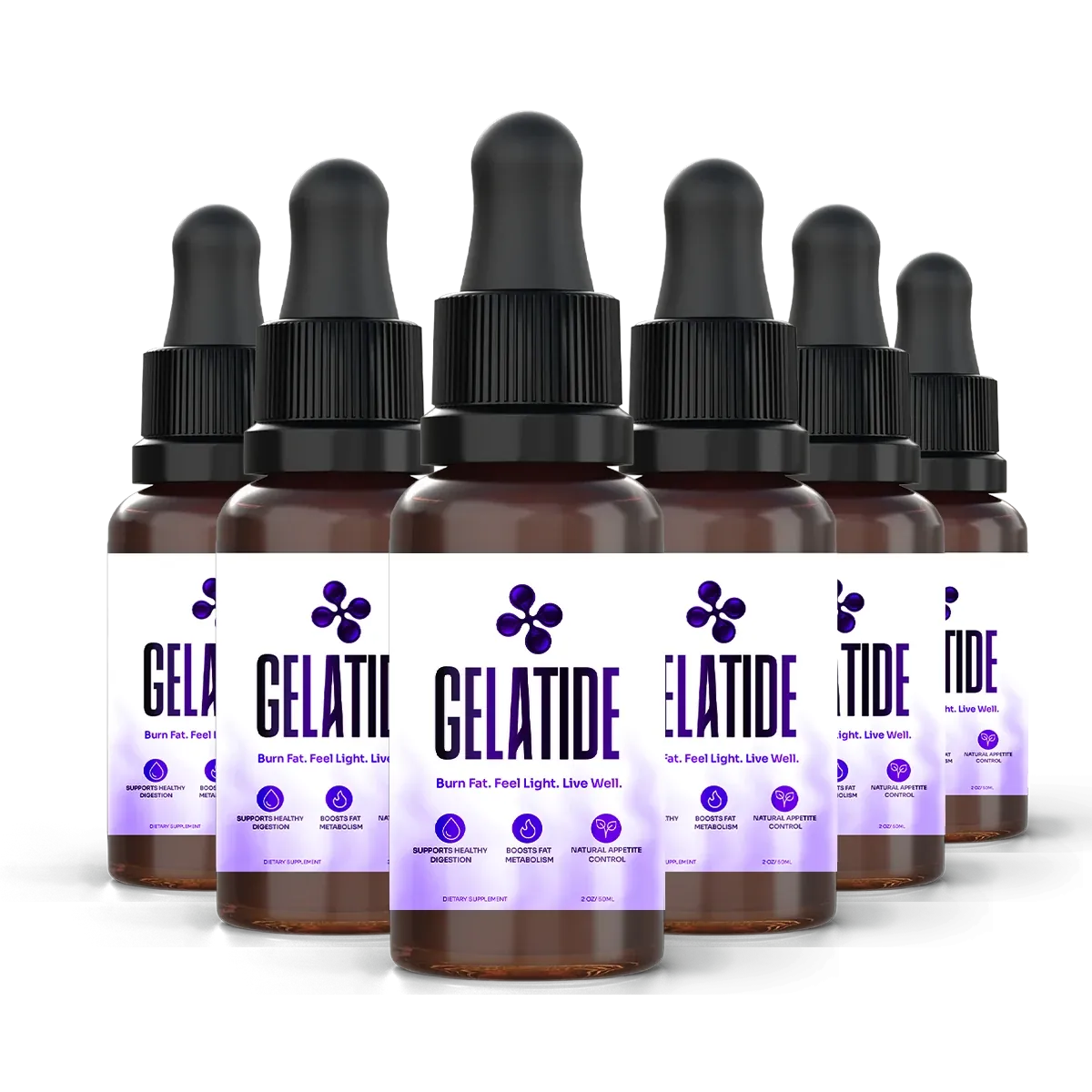
Gelatide is the product this article is about
Six botanicals, no printed amounts, $49 to $79 a bottle at the seller’s checkout and 60 days to send it back. This desk sells it and publishes this article about it, which is the arrangement.
$49 to $79 a bottle · 60-day money-back window
Order GelatideGreen tea: the negative result nobody quotes
Green tea leaf extract is the first ingredient named on this label and it has by far the largest research literature of the six. It has also been studied specifically for appetite, and the result is not the one the category quotes.
A meta-analysis of randomised controlled trials examined green tea and the two hormones most associated with hunger and fullness, leptin and ghrelin. Across the pooled trials it found no consistent change in either. That is a null result on the most-studied ingredient in the bottle, on exactly the mechanism a buyer would assume was doing the work.
Green tea does have findings elsewhere. A meta-analysis of fifteen trials found catechins with caffeine produced small reductions in body weight and waist circumference, with the waist effect losing significance once caffeine was controlled for. Those are weight findings rather than appetite findings, and the distinction matters: a product can affect body weight through energy expenditure without touching hunger at all.
African mango: the ingredient carrying the marketing
If you have read anything about appetite supplements in the last fifteen years you have read about Irvingia gabonensis. It is the ingredient this category leans on hardest and it is the one whose reputation most outruns its evidence.
Onakpoya and colleagues reviewed the randomised controlled trials systematically and reached a conclusion worth quoting in outline: the studies reported favourable effects, they were small, they were short, they were of poor methodological quality, and the evidence was not convincing enough to support the claims being made. Several of the trials came from a single research group and were never independently replicated.
That review is from 2013 and the record has not moved much since. A 2020 meta-analysis of herbal medicines for weight covered the broader field and found effects that were sometimes statistically detectable and rarely of a size a person would notice.
None of that means African mango does nothing. It means nobody has produced the evidence that would let anyone say it does something, which is a different and more honest statement. The full ingredient-by-ingredient picture is on the Gelatide ingredients page.
The confound sitting in the same bottle
There is a problem with assessing appetite control in a product like this one, and it is not about any of the six botanicals. It is about caffeine.
Guarana seed extract and green tea leaf extract both carry caffeine, and both are on this label. Caffeine can blunt appetite transiently in some people, and MedlinePlus sets out what it does plainly enough to check against your own experience.
So consider what happens when somebody takes a caffeinated botanical drop in the morning, feels sharper, and snacks less before lunch. That is a real experience. It is also almost entirely explicable by caffeine, and attributing it to African mango or to raspberry ketone would be a mistake. With no amounts printed, there is no way for the buyer, this desk, or a pharmacist to separate the two.
The practical version of that is on the article about the two caffeine sources, which is the other half of this argument.
Why the missing dose ends the argument
Everything above shares one structure. A finding exists, it belongs to a dose, and the dose is written in the paper. The Gelatide label prints no amount for any of its six botanicals, and neither does the seller’s listing artwork.
| Ingredient | Appetite evidence | Dose in the research | Printed in Gelatide |
|---|---|---|---|
| Capsicum annuum | Meta-analysis: about 74 kcal less per meal | 0.9–10 mg capsaicinoids/day | not published |
| Green tea leaf | Meta-analysis: no consistent leptin or ghrelin change | 270–1,200 mg catechins/day | not published |
| African mango seed | Systematic review: evidence not convincing | 150 mg twice a day | not published |
| Guarana seed | No human food-intake trial | 50–75 mg extract/day | not published |
| Coleus forskohlii | No human food-intake trial | 250 mg of a 10% extract twice daily | not published |
| Raspberry ketone | No human trial of any kind | None established | not published |
Every middle column figure comes from a paper cited in this article. Every right-hand cell is what the label gives you.
That right-hand column is the answer to the question in the headline, as it applies to this bottle. Appetite control has one real finding behind it, in one of six ingredients, at a dose this product does not state. Whether the capsicum in here is anywhere near 0.9 mg of capsaicinoids, or a hundred times it, is unknowable from anything the seller publishes.
The wider context is not encouraging either. A 2021 systematic review of dietary supplements for weight found very few products with evidence strong enough to recommend, and the NIH fact sheet on weight-loss supplements is organised by ingredient and dose precisely because that pairing is what a judgement requires.
How to test appetite control on yourself, properly
None of the above means nobody should try it. It means the only evidence that will ever be available to you about this bottle is your own, so it is worth collecting properly rather than impressionistically.
- Write down what you are testing, before you start. Snacking between meals? Portion size at dinner? Evening eating? Pick one. A vague expectation is impossible to assess and very easy to satisfy in retrospect.
- Change one thing. Starting the drops, a new eating plan and a gym membership in the same week teaches you nothing about the drops.
- Keep a two-line daily note. Date, and what you noticed. Read the notes at week six rather than trusting your memory, which reliably reshapes itself around what you hoped for.
- Account for the caffeine. If you cut a coffee at the same time, or added one, that is a variable and it belongs in the notes.
- Assess at week six and decide by day 55. Buyers through this desk most often describe a change at three to six weeks, and the 60-day guarantee leaves time to post a return if the answer is no.
That last point is the commercially awkward one and the most useful. This desk earns when you buy Gelatide and earns nothing when you return it. It is still the right advice.
Sources cited in this article
- Whiting S, Derbyshire EJ, Tiwari B. Could capsaicinoids help to support weight management? A systematic review and meta-analysis of energy intake data. Appetite. 2014;73:183-8. https://pubmed.ncbi.nlm.nih.gov/24246368/
- Haghighatdoost F, Nobakht M Gh BF, Hariri M. Effect of green tea on plasma leptin and ghrelin levels: a systematic review and meta-analysis of randomized controlled clinical trials. Nutrition. 2018;45:17-23. https://pubmed.ncbi.nlm.nih.gov/29129232/
- Onakpoya I, Davies L, Posadzki P, Ernst E. The efficacy of Irvingia gabonensis supplementation in the management of overweight and obesity: a systematic review of randomized controlled trials. J Diet Suppl. 2013;10(1):29-38. https://pubmed.ncbi.nlm.nih.gov/23419021/
- MedlinePlus. Caffeine. U.S. National Library of Medicine. https://medlineplus.gov/caffeine.html
- Batsis JA, Apolzan JW, Bagley PJ, et al. A systematic review of dietary supplements and alternative therapies for weight loss. Obesity (Silver Spring). 2021;29(7):1102-1113. https://pubmed.ncbi.nlm.nih.gov/34159755/
- National Institutes of Health, Office of Dietary Supplements. Dietary Supplements for Weight Loss: Fact Sheet for Health Professionals. https://ods.od.nih.gov/factsheets/WeightLoss-HealthProfessional/

Every page, every journal post, the bottle facts and the ingredients go through review by Dr. Kia Mitchell, MD before they ship. We write from the printed Gelatide bottle and the seller’s own listing artwork, cite public research beside the amount that research actually used, and print “not published” wherever a figure is not disclosed rather than estimating it. This label names six botanicals and publishes an amount for none of them, and that fact appears in every article that names one. Every PubMed record here was confirmed through the NCBI summary interface before it was written down. Corrections are made on the page itself and the review date moves forward. Write to [email protected]. Last updated September 17, 2026.