Gelatide Official Website › Blog › Structure-function claims
Structure-Function Claims: What A Label May Legally Say
What a supplement label may legally say, what the disclaimer is actually for, and why nothing in the rules links a claim to the amount in the bottle.
- Three kinds of claim exist on a supplement label: health claims, nutrient content claims and structure-function claims.
- Structure-function claims need no pre-approval. They must be truthful, must not be about a disease, and must carry the FDA disclaimer.
- Nothing links the claim to the amount in the bottle. This is the gap the whole category lives in.
- The FTC governs the advertising separately and expects substantiation.
- Five phrases are worth learning to recognise. They are at the bottom of this article.
General information, not medical advice. Gelatide is a dietary supplement for healthy adults aged 18 and over. It is not a drug, it is not FDA-approved, and it is not intended to diagnose, treat, cure or prevent any disease. Two of its six botanicals carry caffeine and no total is printed, so if you take prescription medicine, manage blood pressure, or have a thyroid or liver condition, speak to a clinician or a pharmacist before adding it to anything.
The three kinds of claim on a supplement label
Most arguments about supplement labels happen because the participants are talking about different categories of claim without knowing it. There are three, they are governed differently, and telling them apart takes about a minute once you know.
- Health claims describe a relationship between a substance and a disease or health-related condition. These are tightly controlled and generally require FDA authorisation based on significant scientific agreement. There are not many of them.
- Nutrient content claims describe the level of a nutrient: high in, good source of, reduced. These have defined regulatory meanings.
- Structure-function claims describe an effect on the structure or function of the body. These require no pre-approval. Almost everything you have ever read on a supplement bottle is one of these.
The FDA's labeling guide sets out the boundaries in detail, and it is more readable than its title suggests.
What a structure-function claim is, precisely
The FDA describes structure-function claims as statements about a nutrient or ingredient and its effect on the normal structure or function of the human body. “Calcium builds strong bones” is the textbook example.
Three conditions attach. The claim must be truthful and not misleading. It must not be a disease claim. And the label must carry the disclaimer.
The line between a permitted claim and a disease claim is where most enforcement happens, and it is sharper than it looks:
| Permitted structure-function claim | Disease claim, not permitted |
|---|---|
| Supports healthy digestion | Treats irritable bowel syndrome |
| Helps maintain healthy blood sugar already in the normal range | Lowers blood sugar in diabetics |
| Supports appetite control | Treats obesity |
| Supports a healthy inflammatory response | Reduces arthritis pain |
| Helps maintain cardiovascular health | Prevents heart disease |
Every left-hand phrase is a real one you will find on shelves. The right-hand column is what the same idea becomes when it names a disease, and that is the version that draws enforcement.
Once you can see that pattern you cannot unsee it. Words like supports, helps maintain, promotes and healthy are load-bearing. They are doing legal work, and they are the reason a category that sells hope is able to phrase itself so carefully.
The disclaimer, and what it is actually for
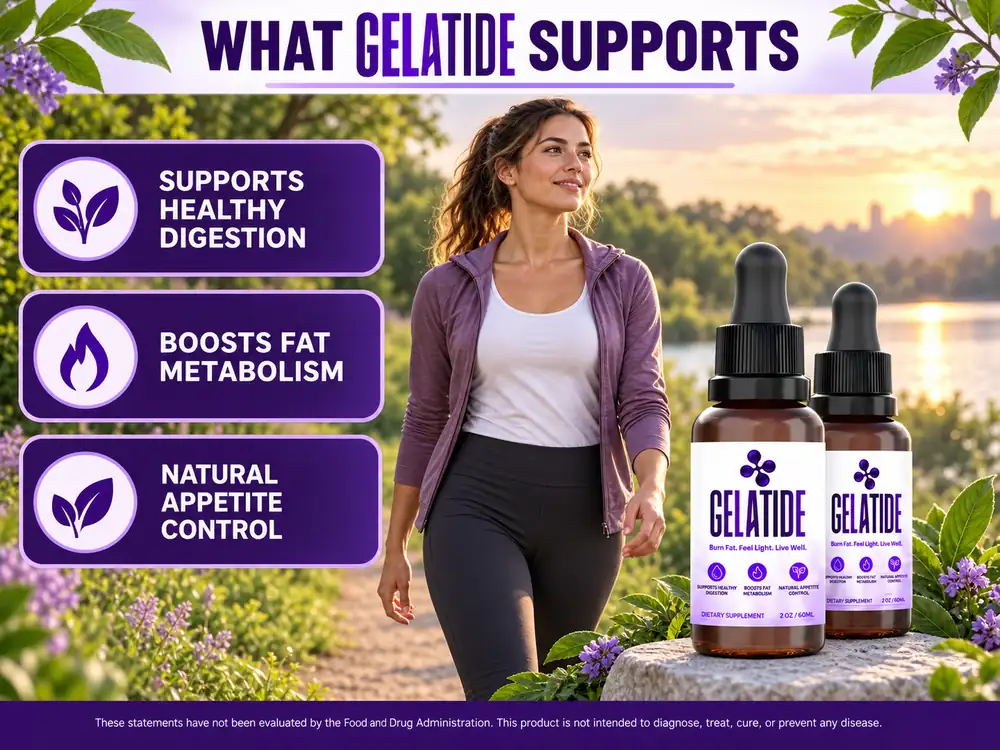
Every page on this website carries it, as does the seller’s own artwork in the image at the top of this article:
These statements have not been evaluated by the Food and Drug Administration. This product is not intended to diagnose, treat, cure or prevent any disease.
The required disclaimerIt is easy to read that as boilerplate. It is not. It is the condition on which the claims above it are allowed to exist, and it says something specific and true: nobody at the FDA looked at the claim before the product went on sale.
The FDA does not approve dietary supplements before they are sold. A manufacturer registers its facility, which is a filing requirement, and is responsible for its own products being safe and accurately labelled. The disclaimer is the point at which that arrangement is disclosed to the buyer.
It also has to be placed where the claim is, which is why it appears on the seller’s panel artwork and at the foot of every page here rather than once on a legal page nobody opens.
The gap between the claim and the amount in the bottle
Here is the part that matters most, and it is the part that is almost never explained.
Nothing in the structure-function rule links the claim to the quantity. A label may say a product supports appetite control while containing an amount of the relevant ingredient far below anything ever tested in a human being. The claim is about the ingredient. The bottle contains the ingredient. The rule is satisfied.
This is why the amount is the single most important thing on any supplement label, and why a label that omits it cannot be evaluated at all. It is also why the NIH fact sheet on weight-loss supplements is organised by ingredient and dose: without the pairing there is nothing to assess.
A worked example, using this product. The label says Natural Appetite Control. Of its six botanicals, only capsicum has a meta-analysis measuring food intake, at about 74 fewer kilocalories per meal, produced by doses of roughly 0.9 to 10 mg of capsaicinoids a day. This label prints no capsicum figure. The claim is permitted. The inference a buyer is invited to draw from it cannot be checked. Both statements are true at once, and the full version is in the appetite article.
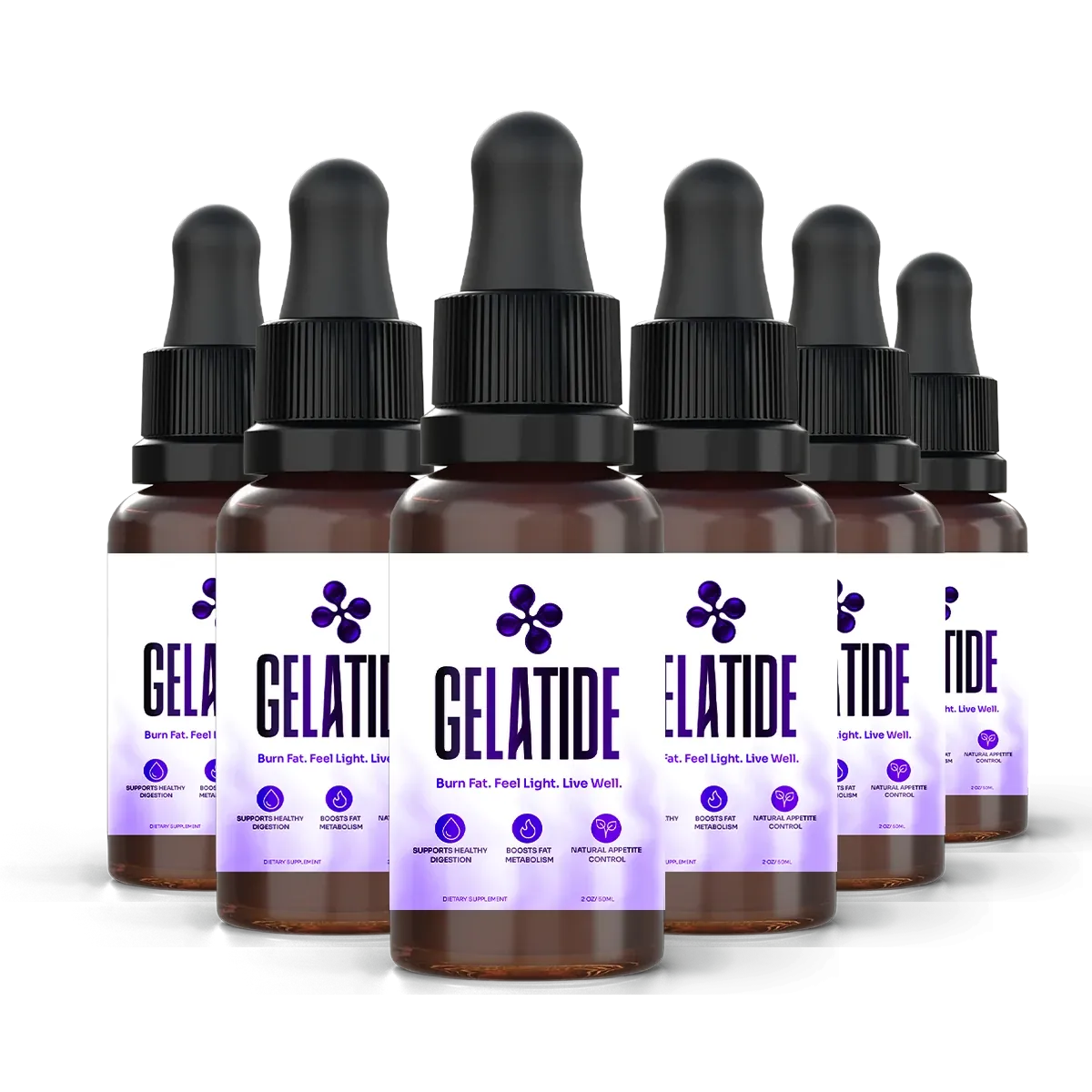
Gelatide, sold by a desk that explains the rules it operates under
Three label claims, six botanicals, no amounts, and every page here says so. $49 to $79 a bottle at the seller’s checkout with a 60-day guarantee.
$49 to $79 a bottle · 60-day money-back window
Order GelatideWhat the FTC adds on top
The FDA governs the label. The Federal Trade Commission governs the advertising, and its standard is different in an important way.
The FTC published health products compliance guidance in 2022, replacing its 1998 dietary supplements advertising guide. The document says the Commission has settled or adjudicated more than 200 cases involving false or misleading claims about health-related products since then, which is a useful indication of how often this goes wrong.
The core expectation is that an advertiser holds competent and reliable scientific evidence for the claims it makes, and that the evidence matches the claim. A stronger claim needs stronger support. A claim about a specific outcome needs evidence about that outcome.
- A promised amount of weight needs evidence of that amount of weight.
- A promised timeline needs evidence over that timeline.
- “Clinically proven” needs a clinical trial of the product, not of an ingredient.
- A comparison price needs to reflect something real.
That last one is worth checking on any product page you are reading. A struck-through figure that the product has never actually sold at is a claim like any other.
Reading this label against the rules
Gelatide prints three support lines: Supports Healthy Digestion, Boosts Fat Metabolism, Natural Appetite Control. All three are structure-function claims, all three are phrased inside the permitted register, and the seller’s artwork carries the disclaimer along the bottom. On the rules as written, that is compliant.
The front of the bottle also carries a three-word marketing slogan above those three lines. It is advertising copy rather than a structure-function claim, and this desk does not repeat it in any heading, title, meta description or piece of structured data anywhere on this website. The three support lines are the ceiling everything here works to, and that decision is explained on the benefits page.
What the rules do not require, and what this label does not do, is print an amount against any of its six botanicals. That is where the compliance stops being the same thing as the information, and it is the reason this website exists in the shape it does.
Five phrases worth recognising on any label
- “Supports” and “helps maintain”. Structure-function vocabulary. They signal a claim that has been phrased to stay inside the rules, which tells you the seller knows the rules and nothing about whether the product works.
- “Clinically studied ingredients”. Attaches a study to an ingredient rather than to the product. Almost always technically true. The question it deflects is whether the amount in the bottle matches the amount in the study.
- “FDA-registered facility”. A filing requirement about a factory. Routinely presented as though it were approval of a product, which it is not.
- “Natural”. No regulatory definition in supplements. Caffeine from guarana is natural.
- “Doctor formulated” or “doctor developed”. Check whether a doctor is named and whether the credential can be found. If not, there is nothing here a reader can verify.
Learning those five takes ten minutes and changes how every product page in this category reads. That is worth more than any individual ingredient article, including the four others on this blog, and it is why this one is here.
Sources cited in this article
- U.S. Food and Drug Administration. Structure/Function Claims. https://www.fda.gov/food/nutrition-food-labeling-and-critical-foods/structurefunction-claims
- U.S. Food and Drug Administration. Dietary Supplement Labeling Guide: Chapter VI. Claims. https://www.fda.gov/food/dietary-supplements-guidance-documents-regulatory-information/dietary-supplement-labeling-guide-chapter-vi-claims
- U.S. Food and Drug Administration. Questions and Answers on Dietary Supplements. https://www.fda.gov/food/information-consumers-using-dietary-supplements/questions-and-answers-dietary-supplements
- Federal Trade Commission. Health Products Compliance Guidance. December 2022. https://www.ftc.gov/business-guidance/resources/health-products-compliance-guidance
- National Institutes of Health, Office of Dietary Supplements. Dietary Supplements for Weight Loss: Fact Sheet for Health Professionals. https://ods.od.nih.gov/factsheets/WeightLoss-HealthProfessional/
Every page, every journal post, the bottle facts and the ingredients go through review by Dr. Kia Mitchell, MD before they ship. We write from the printed Gelatide bottle and the seller’s own listing artwork, cite public research beside the amount that research actually used, and print “not published” wherever a figure is not disclosed rather than estimating it. This label names six botanicals and publishes an amount for none of them, and that fact appears in every article that names one. Every PubMed record here was confirmed through the NCBI summary interface before it was written down. Corrections are made on the page itself and the review date moves forward. Write to [email protected]. Last updated September 17, 2026.